Solitaire: Klondike Card Game
ArkresonCard
4.710.00 Reviews
- Version
- 0.2.3
- Installs
- 10.00K
- Age Rating
- Everyone
Screenshots
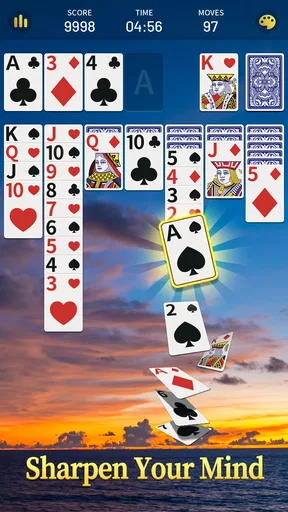
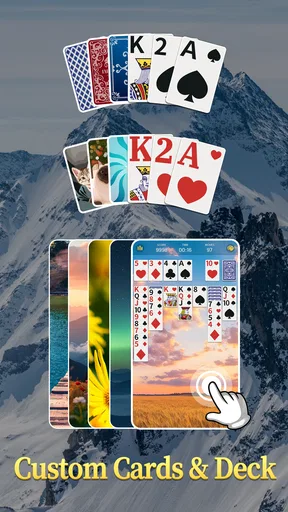

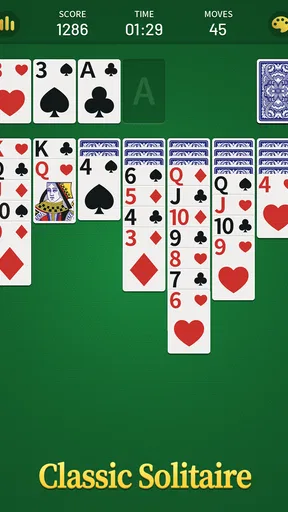
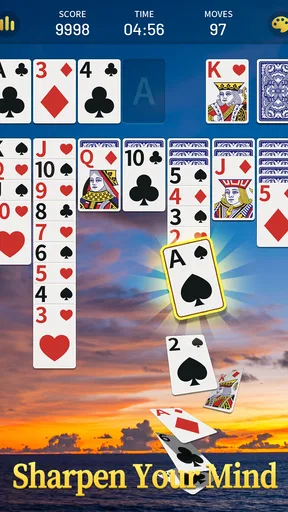
Our Review of Solitaire: Klondike Card Game
 Analysis by Appyee
I found Solitaire: Klondike Card Game to be the kind of game that makes sense almost immediately: open it, start a familiar card layout, and focus on one decision at a time. It is a free card game from Arkreson, aimed at Everyone, and its main appeal is simple play rather than a crowded collection of extra systems. After spending time with it, I would recommend it to anyone who wants a quiet Klondike session that can fit into a short break and continue working when an internet connection is unavailable.
The important thing is to approach it for what it is. This is not a competitive card battler, a social game, or a large collection of solitaire variations. It is a focused digital version of Klondike. That narrow purpose is also its strength: there is less to learn, less to manage, and less temptation to turn a few minutes of downtime into a complicated routine.
What the first game feels like
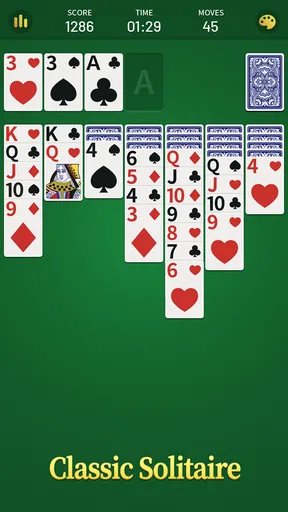
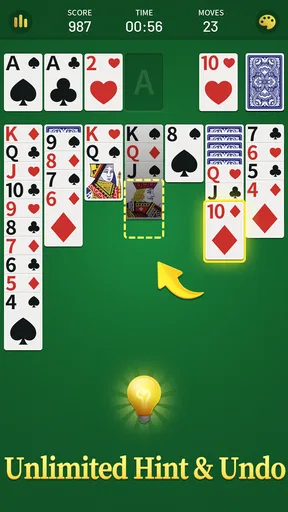
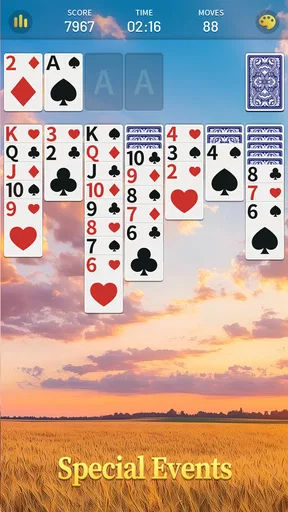
Klondike is familiar to many players, but a first digital session can still feel slightly different from playing with physical cards. The layout places face-up and face-down cards into tableau columns, while the remaining cards form the stock and waste areas. Your goal is to reveal hidden cards, move cards in descending alternating-color sequences, and build the four foundation piles upward by suit.
In my experience, the best way to begin is not to chase a perfect move immediately. I first look for moves that uncover a face-down card or create an empty tableau column. Those actions usually give the game more room to breathe. Moving a visible card simply because it can move may look productive, but exposing hidden information is often more valuable than making a move that changes very little.
The presentation is clean enough that the cards remain the center of attention. That matters in a game where the main challenge is visual scanning. I do not want decorative elements competing with the suits, ranks, or available spaces. The straightforward design makes it easier to return after a few days away because the board does not require relearning.
The game is currently version 0.2.3, and it has reached over ten thousand installs. Its average rating is 4.7 from around forty ratings, with ten written reviews. Those figures suggest that the early audience has responded positively, although I would still treat the game as a focused, developing experience rather than a fully expanded solitaire platform.
One especially useful part of the experience is offline play. I can imagine opening a round during a commute, in a waiting room, or somewhere with unreliable reception without needing the game to become an online activity. That does not make every session exciting, but it makes the game dependable for the small gaps in a normal day when I want something calm and self-contained.
Who will enjoy this version of Klondike
This game suits players who already understand the basic rhythm of solitaire and want a low-pressure way to play it on a phone or tablet. It also works for first-time players because the rules can be learned through the board itself: build down in alternating colors on the tableau, build up by suit in the foundations, and use empty spaces carefully.
I think it is particularly suitable for someone who dislikes games that begin with a long tutorial, account setup, or a stream of interruptions. The appeal is the short path between opening the app and making the first move. If you are looking for a game to occupy a few quiet minutes rather than a hobby with progression, this is a sensible choice.
On the other hand, I would not choose it for someone who wants tournaments, multiplayer matches, a broad selection of card games, or a strong sense of long-term progression. A larger solitaire collection may be better if you regularly switch between Klondike, Spider, FreeCell, and other formats. A competitive card game will obviously offer more pressure and interaction. This one is best when the cards themselves are enough.
Getting started without overthinking the setup
There is no need to prepare a complicated strategy before the first round. After installing it on a device running Android 8.0 or later, I would simply open a game and spend the first minute identifying the board areas. The tableau is where most decisions happen, the stock supplies cards, the waste shows cards recently drawn, and the foundations are where completed suit sequences grow.
For a new player, recognizing the difference between a legal move and a useful move is the first meaningful lesson. A legal move follows the rules, but it may not improve the position. A useful move normally does at least one of three things: reveals a hidden card, opens a column, or makes a future sequence easier to build. Keeping those priorities in mind prevents the early game from becoming random card shuffling.
I also recommend slowing down before touching the stock. It is tempting to draw immediately whenever the tableau seems blocked, but the stock is a limited source of information. I scan all visible tableau cards first, then decide whether drawing will create a new opportunity or merely postpone the same problem. This small habit makes the game feel more strategic without making it difficult.
The free price makes experimentation easy. I can install it for a quick trial rather than committing to a paid card collection, and the Everyone age rating makes it appropriate for a broad audience. That does not mean every family member will enjoy the same pace, but the basic format is accessible and easy to explain.
Your first useful move
For a reassuring first success, I would not define success as winning the entire deal. Instead, aim to uncover one hidden card. Look across the tableau for a face-up card that can be placed onto a card of the opposite color and one rank higher. For example, a black card can receive a red card one rank lower, while a red card can receive a black card one rank lower. If that move exposes a face-down card, you have made genuine progress even if the round later becomes difficult.
The next useful target is an empty tableau column. Empty spaces are valuable because they can hold a king or a sequence beginning with a king, allowing you to reorganize cards that were trapped in a crowded column. I try not to create an empty space casually. If I cannot use it soon, the space may look helpful but provide no immediate benefit.
Building the foundations is satisfying, but sending every available low card there at the first opportunity is not always correct. A card may still be useful in the tableau if it helps uncover another card or supports a longer alternating-color sequence. My practical rule is to consider whether moving the card to its foundation improves the board or removes a card that I still need for rearrangement.
This is one of the less obvious lessons for beginners: the most visible move is not automatically the best move. A move that reveals information often has more value than one that increases a foundation by a single card. Once I began evaluating moves by the space and information they created, the rounds felt less like guessing.
Where new players commonly get confused
The first confusion usually comes from the tableau sequence. Cards are arranged in descending order with alternating colors, but only certain groups can be moved together. If a move seems blocked, I check both the rank and the color before assuming the game is refusing a valid action. A red card cannot be placed on another red card, and the sequence must descend one rank at a time.
The foundations work differently. Each foundation begins with an ace and grows upward within the same suit. That means a two belongs on its matching ace, followed by the three of that suit, and so on. Mixing suits in the foundation is not allowed, even though suits are less important when building descending tableau sequences.
Empty columns are another point that can surprise beginners. They are not general-purpose parking spaces for any card. In standard Klondike play, a king or a sequence led by a king is what turns an empty column into a useful destination. If I move a card away and leave a column open, I need to think about whether I have a realistic way to fill it.
The stock and waste can also make a round feel stuck. When the next visible card is not immediately useful, I resist the urge to declare the deal lost. Sometimes a tableau move changes the destination available for that waste card. Other times, the right choice is to preserve a move and inspect the stock again later. The important idea is that a blocked card may be temporarily blocked rather than permanently unusable.
Because this is a compact game, I would not expect it to explain every strategic detail for me. A player who has never played solitaire may need a short introduction from another source or a few trial rounds to understand why some moves are legal and others are not. That is a limitation worth knowing before recommending it to someone who wants extensive in-game coaching.
A realistic everyday session
Imagine having eight minutes before an appointment. I would open the game, begin a Klondike round, and spend the first few seconds scanning the tableau rather than drawing blindly. I might uncover a hidden card, move a low card toward a foundation, and then pause when the next decision is less obvious. If the appointment arrives, the value of the session is not dependent on finishing. I have still had a quiet mental break, and the offline design makes that use case practical in places where connectivity is inconsistent.
At home, I would use it differently. A longer session gives me time to compare two possible sequences before committing. I can leave a useful card in the tableau temporarily, create room for a king, and revisit the stock with a clearer plan. The same game therefore supports both a quick distraction and a more deliberate puzzle, though it remains intentionally modest in scope.
For older relatives or children learning card patterns, the familiar rules may be more approachable than an abstract puzzle game. I would still sit with a new player for the first round, especially to explain why foundation moves and tableau moves follow different rules. Once those distinctions are clear, the board becomes much easier to read.
How it compares with other solitaire choices
Compared with a physical deck, this version removes setup, card handling, and the possibility of losing a card under the table. It is faster to begin and easier to use in a small space. The trade-off is that physical cards can feel more tactile and social, while a phone game is naturally more solitary.
Compared with a large solitaire app containing many variants, this game is less versatile but also less distracting. If I only want Klondike, a narrow app can feel cleaner than navigating a menu of modes, challenges, themes, and progression screens. If I regularly get bored with one format, however, the larger collection will provide more variety.
Compared with a competitive digital card game, the pace here is gentler and the mental demand is different. There is no opponent forcing a response, so I can stop and reconsider a move. That is ideal for relaxation, but it will not satisfy someone who needs bluffing, surprise, or direct competition.
The biggest trade-off is therefore focus versus depth. Arkreson has chosen a simple card-game identity rather than trying to make this a complete entertainment hub. I see that as a positive for a first-time user who wants a clear starting point, but a limitation for experienced players who expect advanced modes or a deep reward structure.
Small habits that improve the experience
My first practical tip is to prioritize hidden cards over automatic foundation progress. When two moves are available, I usually favor the one that reveals new information, provided it does not destroy a useful sequence. This keeps more options open and reduces the chance of locking myself into a narrow line.
My second tip is to treat the stock as a planning tool rather than a rescue button. Before drawing, I look at which tableau cards could receive the next waste card. If there is no destination, I consider whether I can create one first. This makes stock decisions feel intentional and helps avoid cycling through cards without changing the board.
My third tip is to protect flexibility. I avoid moving a sequence merely because it can move if that sequence is currently supporting several possible plays. I also think twice before filling an empty column with the first king I see. A king can be useful there, but the better king may arrive later, and using the space too early can limit rearrangement.
A fourth useful habit is to pause after every reveal. Newly exposed cards can change the best move completely. Rather than continuing with the plan I had before uncovering the card, I rescan the tableau from the beginning. This takes only a moment and is especially helpful on a small phone screen where several options can be easy to miss.
Where the simple design may feel limited
The same restraint that makes the game approachable may leave some players wanting more. If you expect a detailed tutorial, extensive customization, multiple rule sets, or a strong progression system, this focused Klondike experience may feel bare. I would not install it expecting a constantly changing challenge structure.
It can also become repetitive for players who already play Klondike frequently. The core pleasure comes from finding a route through the current arrangement, so once that loop becomes familiar, variety depends largely on the deals and on how carefully you choose your moves. Someone seeking fresh mechanics every session should look elsewhere.
Another consideration is that offline convenience does not automatically make every round winnable or every short session satisfying. Sometimes the available cards create a difficult position, and sometimes I simply do not have enough time to settle into the puzzle. The game is good at offering a calm activity; it cannot guarantee a dramatic payoff from every opening.
Still, I prefer these limitations to unnecessary complexity in a game designed for quick access. The important question is whether I want a reliable Klondike board or a broader card-game package. For the former, the restrained approach works. For the latter, a more feature-heavy alternative will probably be a better fit.
My recommendation after using it
The best reason to try this game is its short path from installation to a meaningful first move. I can begin with familiar rules, learn by uncovering cards, and use the same app for a brief offline pause or a longer, more thoughtful round. The free price lowers the barrier to trying it, while the broad age rating makes it easy to share as a simple recommendation.
Arkreson’s Solitaire: Klondike Card Game is not trying to replace every card game on a device. It is a compact choice for people who want one classic format presented without much ceremony. I would recommend it to beginners who want a reassuring starting point, casual players who value offline access, and experienced Klondike fans who prefer a clean board over a busy feature set.
I would skip it if my priority were multiplayer competition, numerous solitaire variants, deep customization, or a long-term progression loop. For everyone else, the sensible next step is to play a few rounds slowly: identify the tableau, uncover one hidden card, preserve an empty column for the right king, and use the stock with a plan. Once those habits become natural, the game delivers exactly the quiet, focused card session I want from a simple solitaire app.
Verdict
Strengths of Solitaire: Klondike Card Game
- Classic Klondike rules are easy to learn and familiar to most players.
- Quick games make it convenient for short breaks or casual play.
- Offline access lets you play without Wi-Fi or mobile data.
- Adjustable settings can make cards easier to see and handle.
- Daily challenges add variety beyond standard random deals.
Limitations of Solitaire: Klondike Card Game
- Frequent ads may interrupt games, especially in the free version.
- Some features or themes may require in-app purchases to unlock.
- Gameplay can feel repetitive for players seeking more card games.
- Random deals may occasionally seem unfair or difficult to complete.
- Battery use can increase during longer sessions with animations enabled.
Similar Picks in This Category
View All
Solitaire - Classic Card Games
MobilityWare4.6

UNO!™
Mattel163 Limited4.3

Spider Solitaire: Card Games
MobilityWare4.6

Solitaire.com - Classic Cards
Tripledot Studios Limited4.7

Plants vs. Zombies™ Heroes
ELECTRONIC ARTS4.1

Hearthstone
Blizzard Entertainment, Inc.4.1
Frequently Asked Questions
What is Solitaire: Klondike Card Game?
Solitaire: Klondike Card Game is a digital version of the classic single-player card game most people know as Klondike or Patience. The objective is to arrange all cards into four foundation piles, organized by suit and in ascending order from Ace to King. It is designed for quick, relaxing sessions and can usually be played without needing another person.
How do you play Solitaire: Klondike Card Game?
You begin by moving cards between the tableau columns, building descending sequences with alternating colors. When possible, you can reveal hidden cards, place Kings in empty columns, and draw cards from the stock pile. Aces and other cards are moved to the foundation piles as soon as they become available. The game rewards planning, because some moves can accidentally block useful cards.
Does Solitaire: Klondike Card Game require an internet connection?
In many versions, the basic Solitaire: Klondike Card Game can be played offline after installation, which makes it convenient for travel, commutes, or areas with unreliable connectivity. However, features such as advertisements, cloud synchronization, leaderboards, daily challenges, statistics, or in-app purchases may require an internet connection. Availability can vary depending on the specific Android or iOS version.
Is Solitaire: Klondike Card Game free to download and play?
The game is generally available as a free download, allowing players to enjoy the main Klondike experience without an upfront payment. Free versions commonly include advertising, and some may offer optional purchases for removing ads, unlocking themes, or accessing additional features. Before downloading, it is worth checking the store listing for current pricing, subscriptions, and in-app purchase details.
Is Solitaire: Klondike Card Game suitable for beginners?
Yes, Solitaire: Klondike Card Game is generally friendly to beginners, especially when it includes tutorials, hints, undo controls, and automatic card movement. New players can learn the rules gradually through regular play, while experienced users may prefer harder settings or timed challenges. Keep in mind that some deals are more difficult than others, and not every game can be won.
Play our best games!


